Alberta’s government will invest $200 million to expand post-secondary health care programs through Budget 2023.
This includes $72 million over three years to create more than 3,400 new seats in post-secondary health care programs. A total of $113 million will go towards adding 100 residency training spaces for doctors who have recently graduated, particularly in rural areas and specialist fields.
“Through the Health Workforce Strategy and the many other actions we’re taking, Alberta will build a strong, resilient and sustainable health workforce where its workers are supported to succeed as they provide expert care to improve the lives of Albertans,” said Minister of Health Jason Copping.
The Health Workforce Strategy lays the foundation for a resilient and sustainable health care system that provides Albertans with access to a health home – along with the workforce to deliver health services they need today.
The announcement, made on Monday, March 13, 2023 is just part of that strategy and efforts to address health care challenges through Budget 2023.
Other investments include:
Investing $30 million in health care program expansion to create about 1,800 new seats over the next three years in nursing, health care aide and paramedicine programs.
Investing almost $20 million to create 120 new physician seats at the University of Calgary and the University of Alberta.
Funding will also help increase the number of rural physicians in Alberta in collaboration with the Ministry of Health.
Investing $113 million over three years for medical residency positions to add 100 residency training spaces and fund compensation for academic physicians instructing medical students.
Investing $22 million to upskill internationally educated nurses by creating new bridging programs and expanding seats at existing bridging programs to add 1,500 new spaces.
Investing $14 million over two years for the targeted recruitment of internationally trained nurses from the United States and the United Kingdom.
“This investment in our medical schools is a direct investment in the health of Albertans,” said Dr. Brenda Hemmelgarn, the dean of the Faculty of Medicine and Dentistry at the University of Alberta.
“These dollars will train new physicians, increase opportunities for medical residents and support those who train them, ensuring world-class care in every corner of the province.”
When it comes to the health care seat expansion, publicly funded post-secondary institutions will be invited to submit proposals in health-related programs. Programs could include registered nurses, health care aides, licensed practical nurses, nursing coordinators and supervisors, paramedical occupations and other medical technologists and technicians.
It is expected the number of physician seats available will increase by 58 per cent over 10 years, with more than $2 million in investments already made at the University of Alberta and the University of Calgary.
The physician training expansion investment, meanwhile, is part of the Academic Medicine and Health Services Program, which ensures physicians affiliated with Alberta’s faculties of medicine are fairly compensated for providing patient care along with work related to research, innovation, education, administration, and leadership.
Once the seat expansion is fully realized, Alberta will licence more than 100 additional physicians annually who will be ready to practise.
These investments build on last year’s targeted enrolment expansion, which added 2,500 new seats in health-related programs.
Red Deer-North constituents with questions, concerns or comments can reach out to the local constituency office via the form on the contact page or by phoning (403) 342–2263.
Education funding is increasing to accomodate an expected increase in student enrolment in September 2023.
Over the next three years, the operating expense for Education is increasing by nearly $2 billion. This will go towards the hiring of approximately 3,000 education staff including teachers, educational assistants, bus drivers, and support staff.
A total of $820 million, outlined in Budget 2023, will go towards supporting enrolment growth over the same time period.
“With Alberta’s rising population, we know many school authorities across the province continue to face growing enrolment pressures,” said Minister of Education Adriana LaGrange. “Our strong funding commitment in Budget 2023 will empower school authorities to hire more teachers and obtain more resources for students.”
Watch the Press Conference
Funding increases for enrolment will be provided through existing grants with enrolment components. Such grants include the Early Childhood Services and Grades 1-9 Base Instruction grant, and the High School (Grades 10-12) Base Instruction grant. It also includes services and supports grants such as Specialized Learning Support, English as an Additional Language, and Program Unit Funding, as well as the Operations and Maintenance grant.
The Funding Manual for School Authorities 2023/23 School Year were released on March 9, providing school authorities with funding information for the coming year.
“ASBA is pleased that government has been responsive to school boards’ requests for early release of the funding manual and operational funding profiles, as it assists in informed decision-making,” said Alberta School Boards Association President Marilyn Dennis. “Government’s investment in enrolment growth is welcome news as boards address the growing, diverse and complex students needs within their divisions while remaining accountable to their communities.”
The province says the supplemental enrolment growth grant that provided school authorities with more than $21 million in additional funding will continue to be available in the 2023-24 year.
In both 2020-21 and 2021-22 academic years, school boards were funded for about 730,000 students, where attendance was 705,000 and 716,000, respectively.
Red Deer-North constituents with questions, concerns or comments can reach out to the local constituency office via the form on the contact page or by phoning (403) 342–2263.
Anyone looking to send comments directly to the Minister of Education is asked to contact the Office of the Minister of Education at education.minister@gov.ab.ca or (780)427-5010.
Alberta is investing $10.7 million in supporting women building careers in the skilled trades.
Through Budget 2023, the funding will go towards Women Building Futures. The non-profit organization helps unemployed and underemployed women explore a future in the skilled trades where they can gain paid, on-the-job experience and build a career.
They offer 18 employment programs in six Alberta communities. Support services, readiness workshops, affordable housing and other programs and resources are also available through the organization, connecting women to employers while developing job-ready skills.
“More women are joining the skilled trades each year and I’m so excited to see that,” said Tanya Fir, parliamentary secretary for the Status of Women.
“Women Building Futures does such important work to prepare and support women looking at skilled trade careers and I’m thrilled that our government is supporting their work. This is great news for women, for families, for businesses, and for Alberta as a whole.”
The province says partnering with Women Building Futures to increase the number of women in the skilled trades offers new opportunities for well-paying, high-demand work while providing industry with access to crucial talent.
About 5,700 women apprentices were registered in Alberta in 2022 – a 20 per cent increase from 2021. Still, the province says there is more work to be done to alleviate the gender gap in the skilled trades.
Since 1998, more than 2,700 women have graduated from Women Building Futures programs.
“Stable operational funding for Women Building Futures during the next three years gives us the flexibility to keep our focus on helping unemployed and underemployed women remove barriers to successful careers in the trades. This is good for women and good for Alberta,” said Carol Moen, president and CEO of Women Building Futures.
There will be more spots available for students in apprenticeship programs.
Alberta is creating more than 1,000 new spaces for high-demand programs at post-secondary institutions across the province. This will be done through a funding boost of $15 million over three years for the Apprenticeship Learning Grants which help schools deliver classroom instruction complimentary to on-the-job training.
New seats will be allocated to post-secondary institutions based on student demand and workforce data for in-demand skilled trades.
“Apprenticeship education is an important part of our post-secondary system. Making sure students have access to programs, training and resources not only sets them up for success but supports and grows industries and our economy with a world-class workforce,” said Minister of Advanced Education, Demetrios Nicolaides.
Watch the Press Conference
The province is seeing an increased demand for skilled workers and apprenticeship learning opportunities. Student registration in apprenticeship programs increased to more than 15,600 in 2022 – up from 7,820 in 2020.
Each new seat created means more opportunities to connect students to well-paying jobs while securing the talent Alberta needs to ensure the province remains competitive in a global economy.
“Investment in post-secondary education is a key driver of Alberta’s economic prosperity,” said Stuart Cullum, president of Red Deer Polytechnic. “The expansion of apprenticeship seats ensures Red Deer Polytechnic can address the increased demand for skilled labour and trades training as Alberta industry and business continue to grow and prosper.”
This increase brings the total grant funding to $42 million in 2023-2024.
“For newcomers, language classes are often their first community experience, and they are a vital step on the road to building a life in Alberta. This boost for Red Deer Public Library’s programs will support more Ukrainian newcomers as they improve their quality of life and their contribution to our society and economy,” said Kaycee Madu, Minister of Skilled Trades and Professions.
Language education is key in helping newcomers make the most of educational and work opportunities and join their new communities. Many Ukrainians are highly educated professionals who could play an important role in addressing Alberta’s need for skilled labour.
“These additional funds will allow us to add seven more classes of 12 to 17 people and to replenish resources used by learners who work one-on-one with their volunteer tutors. More language skills will allow these individuals to settle comfortably, find good employment, help their children with homework, pursue further education or get their credentials recertified,” said Red Deer Public Library’s Adult Literacy Program Manager Alla Mysko-Henke.
The library received $145,176 in funding through the Community Adult Learning Program in 2022-23. About $18 million is provided in grants to more than 80 organizations through the program, supporting learning opportunities such as adult literacy, language classes, numeracy, and digital or life skills.
Red Deer-North constituents with questions or comments can reach out to the local constituency office via the contact page.
Post-secondary students struggling with the cost of living will receive help from the provincial government.
The Government of Alberta and the Advanced Education department are providing students with a series of new affordability supports as part of Budget 2023.
“High inflation has made life more expensive for all Albertans, including post-secondary students. These new measures will help all students deal with higher costs during these challenging times,” said Minister of Advanced Education Demetrios Nicolaides in press release.
Initiatives to improve affordability include:
Capping domestic tuition increases at two per cent in 2024-25 and for future academic years.
Reducing student loan interest rates to the prime rate, reducing the cost of borrowing for both current and future Alberta student loan borrowers.
Doubling the student loan interest-free grace period from six months to 12 months to give students more time to find gainful employment
Increasing the thresholds for the Repayment Assistance Plan (RAP) to $40,000 from $25,000 so more students can benefit.
The Alberta Student Grant will also be increased by $225 per month for each eligible student in the 2022-23 loan year. This means eligible students will receive up to $475 per month. The additional funding will be retroactive to the start of the 2022-2023 academic year in the form of a lump sum payment.
Students receiving the additional funding from the Alberta Student Grant will be notified by Alberta Student Aid in March.
Constituents of Red Deer-North with questions, comments, concerns or feedback can reach out to the local constituency office via the contact page.
Alberta aims to bring in more internationally educated nurses to bolster the health care system.
More than 600 new seats are being created for nurse bridging programs, as well as a new bursary for internationally educated nurses.
“We are reducing barriers for internationally educated nurses to come to Alberta,” said Minister of Advanced Education Demetrios Nicolaides. “This is truly a ‘win-win’ for our province, and will help us train more nurses to keep our health care system strong now, and in the future.”
In Budget 2023, Alberta is planning to invest more than $15 million to train and support these nurses.
“The costs of internationally trained nurses to get accredited to work in Alberta can be a hurdle for many looking to further their careers here,” said Minister of Health Jason Copping. “These bridging program bursaries remove the financial challenges and also help attract more health-care workers to the province to meet our growing needs.”
Bursaries for internationally educated nurses
A $7.8 million annual investment, under Budget 2023, will fund non-repayable financial assistance for internationally educated nurses, building on the $1.25 million announcement last fall.
Eligible nurses would be able to access up to $30,000 over five years through a bursary to help offset the costs of nursing bridging programs, tuition and living expenses. The bursary will be available in the 2023-24 academic year.
Recipients are required to complete one year of nursing service in Alberta for every $6,000 disbursed. This will ensure Albertan patients and communities benefit from having nurses start their careers in the province. A third party will disburse assistance and oversee the program on behalf of Alberta Student Aid.
Any internationally educated nurse learner living in Alberta who has enrolled in an approved bridging program will be eligible for the bursary, regardless of their eligibility for any other federal or provincial student aid. The amount will be determined base don program of study, tuition costs, licensing and program fees, with a minimum of $8,000 awarded.
600 new seats in bridging program
A total of $7.3 million is earmarked to create more than 600 new seats for registered nurse and licensed practical nurse bridging and licensing programs starting in the 2023-24 academic year.
This includes 256 new seats at Mount Royal University, 120 at Bow Valley College and 250 at NorQuest College nurse bridging programs.
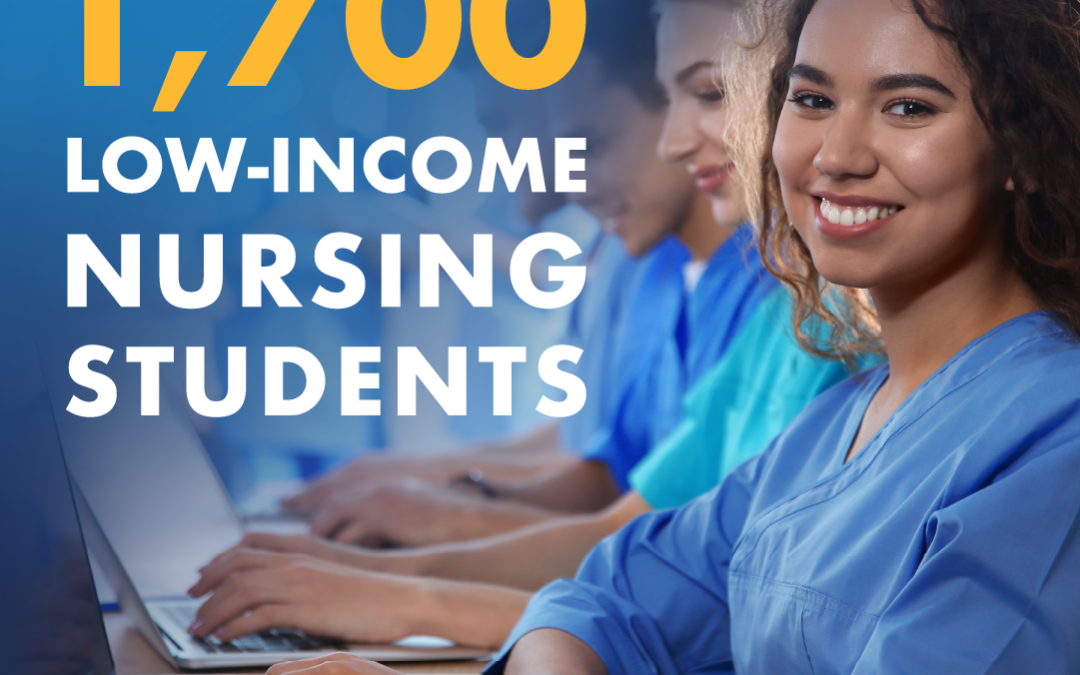
Low-income nursing students will see their education become a bit more affordable thanks to an $8.5-million additional investment into the New Beginnings Bursary.
Up to 1,700 students will be eligible for the one-time, non-repayable $5,000 bursary. Recipients will automatically be selected from student loan applicants who meet program and financial eligibility criteria.
“The New Beginnings Bursary provides assistance to those who are interested in joining the health care workforce, but may not be able to afford the additional training,” said Health Minister Jason Copping.
“Health care needs continue to grow in our province and we need more local professionals familiar with the challenges in their area. By increasing education opportunities for Albertans, we improve the chances of retaining home-grown talent.”
Watch the press release.
The New Beginnings Bursary was created in 2022 to increase access to post-secondary education for those who might not be able to attend due to financial constraints. The government anticipates that by the end of 2023-24 academic year, a total of 3,400 low-income students will have benefitted from the bursary.
“Being able to access high-quality and affordable education was very important to me when I decided to become a nurse. This new funding through the New Beginnings Bursary will help so many more nurses access the training they need to go on to have successful careers in the healthcare sector, and ensure Albertans have access to the care they need,” said Nancy Tran, a nursing student at Mount Royal University.
The funding is part of Alberta’s Healthcare Action Plan, aimed at addressing high demand for nurses and healthcare professionals in the province. Alberta’s government created nearly 2,500 new seats in health-related programs last year. Other initiatives include expanded training for internationally educated nurses and funding micro-credential programs in health care fields.
Red Deer-North constituents with questions, concerns or feedback on helping low-income nursing students can reach out to the local Constituency Office via the contact form.
View the original press release on the Government of Alberta website.
The Alberta government is increasing funding for students who are blind, deafblind, hard of hearing or have complex communications needs.
Funding for Low Incidence Supports and Services (LISS) is being increased from $1.8 million to $5 million. This increase will allow school authorities to hire and train specialists and provide equipment to maintain an inclusive learning environment.
The decision was made in response to feedback from education partners and school authorities.
“We have heard from families and school divisions that more supports are needed in the classroom to help address and support class complexity,” said Minister of Education and the MLA for Red Deer-North Adriana LaGrange.
“This funding is one of many steps we are taking to further strengthen our education system by making it a place where students are able to maximize their potential with minimal barriers.”
Students who are blind or visually impaired, deaf, hard-of-hearing, deafblind or have complex communication needs account for about one per cent of the student population in the province – or 7,500 students.
Funding will be provided directly to public and separate school boards, public charter schools and francophone regional authorities that identified need for additional supports.
“Education is a key predictor of future employment and quality of life in the blind and partially sighted community,” said Christall Beaudry, the vice president in Western Canada for the CNIB Foundation.
“This announcement shows the government listened to our students, parents and teachers for the visually impaired and they understand that investing directly in the education sector will make a meaningful difference, both now and in the future so our kids will thrive.”
Red Deer-North constituents with questions or concerns can reach out to the Constituency Office by using the contact form.
If you have comments, questions or concerns for the Minister of Education, please contact the Office of the Minister of Education at education.minister@gov.ab.ca or 780-427-5010.
Students with persistent or prolonged disabilities will now have access to financial support to complete their studies.
The Alberta government is expanding supports for students with disabilities to include long-term impairments and limitations previously ineligible for grant funding for those with permanent disabilities. This change will see an additional 5,200 students receive financial aid to pursue post-secondary education for a total of over 11,000 each year.
“Our government continues to take steps to make post-secondary education more accessible and affordable so that all Albertans can learn the skills they need to succeed,” said Minister of Advanced Education Demetrios Nicolaides.
“By increasing access to disability supports, we are ensuring vulnerable Albertans have the supports they need to pursue higher education and find rewarding careers.”
In 2020-2021, more than 109, 800 Albertans received student loans and grants. A total of 85 per cent attended schools in Alberta, 12 per cent in another province or territory, and three per cent outside the country. Six per cent of these students had a permanent disability.
The changes also support Alberta 2030 flagship initiatives, including expanding the availability of needs-based grants through Alberta Student Aid, as well as increasing need-based financial aid.
The Government of Alberta press release can be viewed on the provincial site here.
Red Deer-North constituents with questions, concerns or comments about the expanded supports for students living with disabilities can reach out to the Red Deer-North Constituency Office via the contact form.