Alberta’s government will provide more than $10 million to Indigenous partners through the new Bridging Classrooms to Communities pilot program.
Alberta Education is committed to improving education outcomes and creating opportunities for First Nations, Métis and Inuit students. Creating welcoming environments, demonstrating cultural awareness and providing system supports through the Bridging Classrooms to Communities program will help support Indigenous students’ success in and out of the classroom.
This new pilot program will help Indigenous partners such as the Alberta Native Friendship Centres Association (ANFCA) build relationships with local school authorities to advance reconciliation and support the hiring of community connection workers to strengthen student relationships with Indigenous communities.
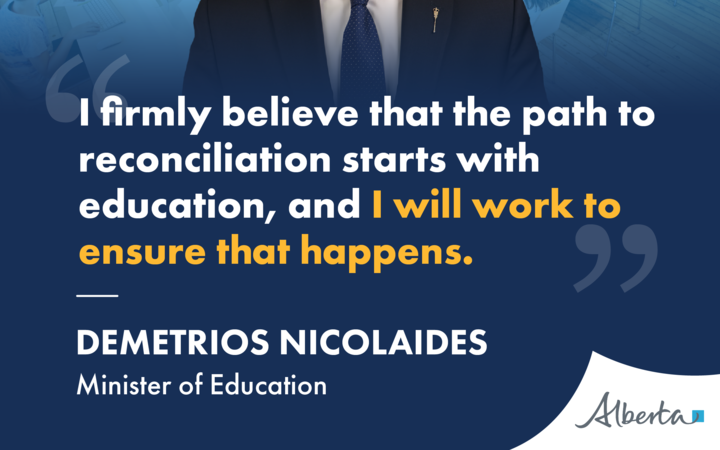
“This is an important step forward in advancing reconciliation. Alberta’s United Conservative government takes reconciliation seriously and this small but important step will help bring Indigenous communities and school authorities closer together. As Alberta’s minister of education, I firmly believe that the path to reconciliation starts with education, and I will work to ensure that happens.”
Demetrios Nicolaides, Minister of Education
The new Bridging Classrooms to Communities pilot program will provide $10.5 million over three years. ANFCA will receive $7.5 million to distribute to friendship centres within their network. The remaining $3 million is earmarked for eligible Indigenous organizations to support community connection projects in urban and rural areas across Alberta.
By creating meaningful connections, this pilot program will help Indigenous students and their families feel heard, respected and involved in Alberta schools.
Recipients will receive up to $100,000 per year to hire community connection workers who will work with school authorities to:
Develop Indigenous-centered school events, programs and supports.
Provide guidance to teachers and school leaders to strengthen communication with Indigenous students, families and communities.
Make timely referrals to external support systems and services.
Improve access to transportation, technology, tutoring, social activities, sports and other supports and services.
“Alberta’s government is pleased to fund this pilot program that will help build relationships between community partners and create new opportunities in education for Indigenous students. These meaningful connections will help provide excellent opportunities for Indigenous students to feel heard and receive support to excel at school and in life now and in the future.”
Rick Wilson, Minister of Indigenous Relations
“With this support from Alberta Education, friendship centres are able to weave Indigenous knowledge and culturally responsive educational supports to increase positive learning environments and urban Indigenous students’ academic and future success.”
Len Morissette, president, Alberta Native Friendship Centres Association
Grant applications will open later this summer and successful applicants will receive funding in the fall.
Alberta’s government is committed to reconciliation and Indigenous-led solutions that result in meaningful change and a better future for all.
Quick facts
Friendship centres provide cultural programs and services to respond to the unique needs of Indigenous people in urban and rural communities across Canada.
Alberta’s government is increasing the Alberta Student Grant to make post-secondary education more affordable for more than 20,000 students and their families.
Since its creation in 2020, the Alberta Student Grant has helped reduce financial barriers for low-income students so they can focus on their education.
Effective immediately, eligible student grant recipients for the 2023-24 academic year will receive up to $5,100 in non-repayable funding support. Monthly support payments will rise from $250 to $425 per month, an increase from the 2022-23 academic year.
“No student should be deterred from reaching their career goals. Alberta’s government will continue to find ways to keep life affordable for Albertans and to set them up for success, both during and after their studies.”
Rajan Sawhney, Minister of Advanced Education
Student grant applications for the upcoming academic year will open on June 28.
To ensure a smooth process, students applying for Alberta student loans will be automatically assessed for eligibility. No separate application will be necessary.
Quick facts
Earlier this year, Alberta’s government announced more affordability measures that will provide further financial relief to Alberta student loan borrowers, effective July 1:
Interest rates are reduced from prime plus one per cent.
The student loan interest-free grace period doubled from six months to 12 months.
The threshold for the Repayment Assistance Plan increased from $25,000 to $40,000 so more students can benefit from the program.
Red Deer-North constituents with questions, concerns or comments can reach out to the local constituency office. They can do so via the form on the contact page or by phoning (403) 342–2263.
Alberta’s government is strengthening career education programming based on recommendations from the Career Education Task Force.
Preparing Alberta students for careers in the province’s growing and diversifying economy is crucial to fill much-needed positions across the province and further boost the economy. Throughout November and December 2022, the task force travelled across Alberta and heard from students, teachers, education partners and industry leaders to determine how government can help improve access and limit barriers to career education.
Their recommendations included increasing access to off-campus education, reducing financial and accessibility barriers, expanding teacher training opportunities, creating scholarship opportunities and ensuring effective program evaluation. Creating more opportunities for hands-on learning experiences for students while helping to relieve employment pressures for industry will keep Alberta’s economy moving forward for decades to come.
“Alberta’s government is committed to ensuring students have every opportunity to pursue their career interests and succeed in Alberta’s expanding job market. Thanks to the valuable advice of the Career Education Task Force, we have a plan to improve career education that will set students on the path to success, in the workplace and beyond.”
Adriana LaGrange, Minister of Education
Watch the press conference.
“It was an honour and a privilege to be asked to lead such a highly skilled and motivated group of task force members by the minister of Education. The feedback our task force received from various stakeholders regarding career education and how it connects post-secondary and industries was instrumental for the recommendations we provided to the minister. The task force has made recommendations that are relevant and timely which, in combination with a framework, will allow students to discover their career paths in an efficient and meaningful way. This will allow them to realize their full potential in Alberta’s vibrant and diversified economy for years to come.”
Shane Getson, MLA for Lac Ste. Anne-Parkland and chair, Career Education Task Force
The task force’s final report was developed after a comprehensive review of career education programming currently available and engagement with education partners, business and industry partners, and Albertans. The report includes recommendations to strengthen career education programming for students across the province. Alberta’s government will immediately address five recommendations while evaluating the others for future consideration:
Increasing ease of access to off-campus education for all students regardless of where they attend school.
Reviewing dual credit programming to remove financial, accessibility and awareness barriers.
Developing and funding teacher training opportunities for career and technology studies and career and technology foundations programming.
Developing and promoting career education scholarships for students.
Enhancing how career education programming is measured and evaluated.
“Practical hands-on learning is a proven way to increase graduate readiness for the workplace or future education, which is what makes it vital for Alberta’s students. These recommendations will help us create a more modern education system that better reflects the needs of Albertans and helps students develop the skills they need to be successful.”
Kaycee Madu, Minister of Skilled Trades and Professions
“Our government continues to invest in Alberta’s future and create new opportunities for young Albertans. The Career Education Task Force’s work will reduce barriers to learning and help students learn the skills they need to build successful careers.”
Demetrios Nicolaides, Minister of Advanced Education
“Forecasts confirm that there will be up to 100,000 available skilled trades positions in Alberta over the coming decade. With the Career Education Task Force providing information and supports to younger Albertans, we’re setting up many current students for future success in the other four-year degree skilled trades.”
Brian Jean, Minister of Jobs, Economy and Northern Development
Over the coming weeks, Alberta Education will work with education partners and cross-ministry working groups to develop and implement these recommendations. Implementing these recommendations will build on work already being done in Alberta classrooms. Some aspects of career education are addressed through the new K-6 Physical Education and Wellness curriculum. For example, in K-3, students will learn about roles in work situations and how these connect to life and career stages. In grades 4 to 6, students will learn about career experiences and volunteerism.
“We are experiencing rapid change in all sectors of the economy, creating many new opportunities and careers for Albertans. The task force report contains the framework and the recommendations to respond with greater collaboration of stakeholders. We look forward, as businesses and employers, to expanded partnerships, providing hands-on learning for students as they consider pathways to their careers.”
David Price, director, Sunterra Group
“My personal involvement on the task force gave me unique insights into the necessity of quality career education and the opportunities that exist to better meet students’ needs in this area. The report will enhance our focus on this vital area.”
Scott Morrison, president, College of Alberta School Superintendents
“Opening trades training paths for young women in Alberta also opens exceptional careers and related economic security. The Career Education Task Force has identified barriers on those paths that can keep young women from reaching their potential, and I am confident with action that there is a better future ahead.”
Carol Moen, president and CEO, Women Building Futures Society
To address a number of the task force recommendations, the government will be working with CAREERS: The Next Generation on grant funding to support increased participation in off-campus programs and improve internship support and coordination. CAREERS will be engaging with school authorities to collaborate through shared resources to help students access internship placements with employers.
“For the past 25 years, CAREERS: The Next Generation Foundation has been working with schools and industry to provide our youth with career experiences through paid workplace internships. We fully support the recommendations from the Career Education Task Force that provide direction on increasing the opportunity for many more students to participate in work-integrated learning in finding their career passion. Strengthening career education through these recommendations will position Alberta as a leader in preparing the next generation for success.”
Andy Neigel, president, CAREERS: The Next Generation
The final report includes a provincial framework that sets the direction for future career education development and delivery in Alberta. The framework will improve students’ access to practical, foundational learning opportunities that will boost Alberta’s economy. It highlights seven desired outcomes for career education programming, including the simplified delivery of career education and collaborative partnerships that align education and employers.
Quick facts
In November and December 2022, the task force engaged with education partners, business and industry stakeholders and Albertans to understand their unique perspectives and local insights on career education programming.
Career education programming is currently available to students in the K-12 education system, with a strong emphasis on grades 10 to 12. Programming includes five components:
Career and Technology Foundations (CTF), where students in grades 5 to 9 explore their interests by learning about various career possibilities and exploring different occupations.
Career and Technology Studies (CTS), where students take courses to develop practical skills and enhance their employability and/or post-secondary prospects.
Dual Credit, where high school students take courses that help them discover their career interests while earning both high school and post-secondary credits.
Knowledge & Employability Occupational Courses, where students develop employability skills to become active and responsible citizens, achieve their educational and career goals and positively impact their communities.
Off-campus education that enables students to acquire knowledge and skills related to work and other life roles by participating in out-of-class study, observation and/or performance at community-based work sites (volunteer or paid). Off-campus education programs include career internships, Green Certificate Program, Registered Apprenticeship Program, Work Experience, Work Study and Workplace Readiness and Practicum.
Red Deer-North constituents with questions, concerns or comments can reach out to the local constituency office. They can do so via the form on the contact page or by phoning (403) 342–2263.
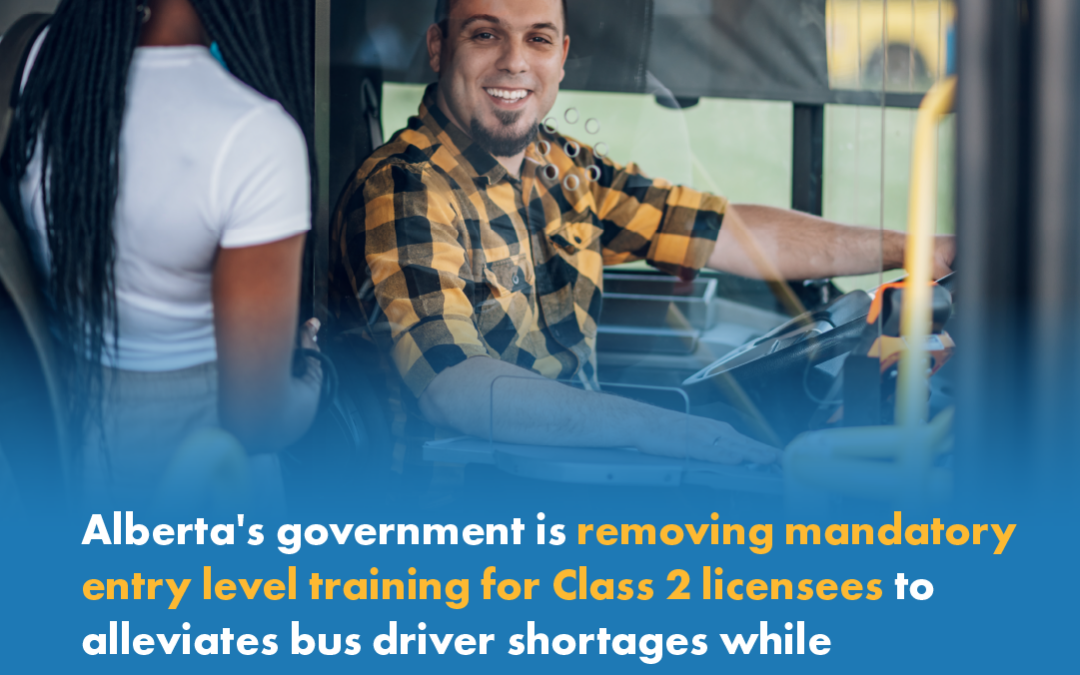
Alberta’s government is removing mandatory entry level training (MELT) for Class 2 licensees to help alleviate bus driver shortages while maintaining safety on Alberta roads.
Alberta school boards have reported difficulty hiring and retaining new school bus drivers to provide safe transportation for students. Removing the MELT requirement for Class 2 drivers will make it easier for school boards and bus companies to hire and train drivers, helping to alleviate the ongoing school bus driver shortage.
Drivers must still obtain the S endorsement on their licence if they will be driving a school bus. To obtain the S endorsement, drivers must first complete the school bus driver improvement program. The S endorsement will be added to their licence after they successfully complete the school bus driver improvement program, which consists of classroom training, practical training and knowledge assessments.
“Alberta is an outlier on requiring MELT for Class 2 licences, as no other province or territory in Canada requires it for their bus drivers. Removing this requirement will make it easier for Albertans to obtain their Class 2 licence if they are able to demonstrate the required knowledge and skills during the knowledge and road test.”
Devin Dreeshen, Minister of Transportation and Economic Corridors
Watch the Press Conference on reducing the school bus driver shortage.
Effective April 23, Class 2 drivers will no longer need to take MELT when seeking their Class 2 licence. School bus drivers will still be required to possess an S endorsement on their licence. Drivers need the correct class of driver’s licence for the type of school bus they will drive. The required class of licence for a school bus is decided by its designed seating capacity.
A new voluntary on-the-job training program for Class 2 and Class 4 school bus drivers will be available by the end of April to support drivers, ensuring they have the skills required to operate a school bus safely. Drivers will get hands-on experience in their work environment using equipment and experiencing real-life scenarios that occur as they do their job.
“Alberta’s student transportation leaders have been asking for this change since 2019. It safely allows us to provide individualized training based on competency instead of a time-based format that does not take existing skills into consideration. I applaud Alberta for listening to our concerns and am excited for the improvements our communities will feel.”
“Alberta School Boards Association has been advocating for adjustments to MELT requirements as it has created hiring and retention challenges, resulting in school bus driver shortages and increased costs. We are pleased to see that school bus drivers will no longer require MELT and that specific training will remain in place to ensure the safety of students.”
Marilyn Dennis, president, Alberta School Boards Association
“The CASS board of directors is pleased that training, specific to transporting students on school buses, will replace MELT as this approach will help address driver shortages while maintaining safety. ”
Scott Morrison, president, College of Alberta School Superintendents
“The Student Transportation Association of Alberta has been asking for changes since the implementation of the MELT program in 2019. This change will allow school divisions and contractors to provide individualized training based on competency instead of a time-based format that did not take existing skills into consideration. I applaud the Alberta government for listening to our concerns and we as an organization are excited to be able to work with all new drivers in providing a targeted training based on their skill level.”
David Shaw, president, Student Transportation Association of Alberta
“The ASBCA expresses its satisfaction with the modifications made to reduce the prescriptive nature of the MELT program. This change will enable contractors to expedite the on-boarding of new drivers and improve the quality of service to families in Alberta.”
Mark Critch, president, Alberta School Bus Contractors’ Association
Transportation and Economic Corridors has also developed a new voluntary on-the-job training grant program for Class 1 drivers. Post-licensing training options will be created for industry by industry in partnership with the Alberta Motor Transport Association. This voluntary training program for licensed Class 1 drivers will be designed to provide participants with job-related skills, knowledge and competencies to meet the full scope of work performed by a commercial truck driver.
Both training programs (Class 1 and Class 2 licensees) will begin this year and are focused on helping alleviate labour shortages in key areas of the commercial driving industry within Alberta.
In March, Alberta’s government introduced regulatory changes to student transportation, adding 33,000 students who are now eligible for government-funded busing services. Alberta’s government is responding to this increased demand for busing services and bus drivers with additional student transportation funding, and by eliminating MELT for Class 2 drivers.
Quick facts
On March 1, 2019, MELT became a new licensing requirement for Class 1 and Class 2 drivers in Alberta
As of March 31, 2022, there were 147,134 Class 1 drivers and 24,699 Class 2 drivers in Alberta.
Alberta is the only province in Canada to mandate MELT for Class 2 licence holders.
Red Deer-North constituents with questions, concerns or comments can reach out to the local constituency office. They can do so via the form on the contact page or by phoning (403) 342–2263.
Alberta’s government is investing $193 million to create nearly 8,000 new seats in high-demand post-secondary programs across the province.
Alberta continues to be the economic engine of Canada. Alberta’s economy has momentum and the government is focused on even more job creation and diversification. This investment will help ensure students can access the skills and training they need, close to home, to build successful careers and secure Alberta’s future.
The Budget 2023 funding represents Alberta’s single largest investment for a targeted enrolment expansion initiative. This historic investment builds off last year’s success, which saw Alberta’s government create nearly 10,000 new post-secondary seats across the province. This represented the largest targeted seat expansion in Alberta’s history.
“Last year, we announced an investment of $171 million to create 10,000 new spaces at our universities and colleges. Today, we are investing another $111 million to create another 3,000 spaces. This is the largest targeted expansion of seats in Alberta history and will ensure young Albertans can get into the programs they want, right here at home.”
Demetrios Nicolaides, Minister of Advanced Education
Watch the Press Conference on creating thousands of new post-secondary seats.
This $193-million investment will fund new seats in high-demand programs such as health care, technology and business, with:
$87 million to continue programs announced in 2022 so students can complete their four-year programs.
$10 million over three years to create more than 1,100 new seats for business, technology and other programs at 23 post-secondary institutions across the province.
$6 million over four years to create 120 new seats in Mount Royal University’s bachelor of aviation management program.
$3.6 million over three years in tech talent funding to create 300 new seats at five post-secondary institutions.
$86 million to expand health care training programs with:
$20 million over three years to create 120 new physician seats at the University of Calgary and the University of Alberta.
$44 million over three years to create 1,400 new seats in health-related programs (registered nurses, health care aides, licensed practical nurses, nursing coordinators and supervisors, paramedical occupations and other technicians).
$22 million over three years to create 2,100 additional seats in nurse bridging programs for internationally educated nurses.
“We are committed to growing our health care workforce and ensuring we have the spaces available for Alberta’s students to continue their education. The increase in post-secondary health care training program spaces will help address staffing needs and build a stronger health care system for Albertans.”
Jason Copping, Minister of Health
Programs receiving funding in 2023 are chosen based on workforce needs, learner demand and institutional capacity, among other criteria. Priority sectors being funded include health care, technology and business. Of the new seats receiving funding, more than 3,400 are in health care training programs.
“This investment by the province will help build UCalgary’s capacity to meet the growing demand for high-quality medical education, particularly in areas like family medicine, which will help to address the physician shortage and provide better long-term health care for Albertans.”Ed McCauley, president and vice-chancellor, University of Calgary
Budget 2023 secures Alberta’s future by transforming the health care system to meet people’s needs, supporting Albertans with the high cost of living, keeping our communities safe and driving the economy with more jobs, quality education and continued diversification.
New programs receiving Budget 2023 targeted enrolment expansion funding
Program
Dollars
Seats
Calgary
$22,821,963
850
Alberta University of the Arts
Object Design and Fabrication
394,704
66
Ambrose University
Bachelor of Arts (Behavioural Science) Bachelor of Arts (Psychology)
537,599
45
Bow Valley College
Practical Nurse (Online)
736,696
48
Bow Valley College
3D Animation
488,952
25
Bow Valley College
Advanced Visual Effects
466,670
25
Bow Valley College
Advanced Game Development
452,360
25
Mount Royal University
Bachelor of Science in Data Science
$4,035,499
250
SAIT
Primary Care Paramedic
$1,325,568
54
SAIT
Advanced Care Paramedic
$1,606,134
36
SAIT
Business Intelligence: Data Analysis and Reporting
$370,900
90
St. Mary’s University
Master of Education in Catholic Leadership
$230,235
50
University of Calgary
Master of Physician Assistant
$6,845,274
40
University of Calgary
Bachelor of Nursing
$5,331,372
96
Central
$10,537,956
388
Burman University
Bachelor of Business Administration
1,209,280
60
Olds College
Animal Health Technology
$562,326
60
Red Deer Polytechnic
Administrative Professional
$96,031
72
Red Deer Polytechnic
Pharmacy Technician
$551,096
48
Red Deer Polytechnic
Medical Device Technologist
$681,073
60
University of Alberta (Augustana Campus)
Master of Science in Speech Language Pathology
$2,539,652
30
University of Alberta (Augustana Campus)
Master of Science in Occupational Therapy
$2,473,076
30
University of Alberta (Augustana Campus)
Master of Science in Physical Therapy
$2,425,422
28
Edmonton
$13,759,475
517
Concordia University of Edmonton
Bachelor of Management
$1,242,299
60
Concordia University of Edmonton
Master of Information System Security Management
$194,762
15
Concordia University of Edmonton
Master of Information System Assurance Management
$194,762
15
MacEwan University
Psychiatric Nursing Diploma
$2,172,041
72
MacEwan University
Bachelor of Science in Nursing
$3,048,435
144
NAIT
Advanced Care Paramedic Primary Care Paramedic
$2,308,859
48
NorQuest College
Medical Device Reprocessing Technician
$1,060,197
93
The King’s University
Bachelor of Commerce, Information Systems Concentration
$269,240
30
University of Alberta
Bachelor of Science in Medical Laboratory Science
$2,660,400
22
University of Alberta
Master of Science in Public Health
$288,480
6
University of Alberta
Course-Based Master’s Program in Modeling, Data and Predictions
$320,000
12
Northeast
$2,048,665
189
Keyano College
Bachelor of Science Nursing
$738,050
48
Keyano College
Primary Care Paramedic
$435,615
45
Portage College
Paramedicine
$875,000
96
Northwest
$2,420,455
608
Athabasca University
Post-Licensed Practical Nurse Bachelor of Nursing
494,000
60
Athabasca University
Bachelor of Science (Major in Computing and Information Systems)
143,000
360
Northern Lakes College
Post-Licensed Practical Nurse Bachelor of Nursing
$429,090
60
Northwestern Polytechnic
Practical Nurse
$985,777
80
Northwestern Polytechnic
Primary Care Paramedic
$368,587
48
South
$6,101,506
288
Medicine Hat College
Practical Nurse
$2,105,084
96
University of Lethbridge
Bachelor of Nursing (with Lethbridge College)
$1,887,304
57
University of Lethbridge
Bachelor of Science Computer Science
$1,746,276
100
University of Lethbridge
Graduate Certificate in Data Science
$362,842
35
Grand Total
$57,690,019
2,840
The grand total of $57.6 million in the chart above reflects the:
$44 million to create 1,400 new seats in health-related programs.
$10 million to create more than 1,100 new seats for business, technology and other programs.
$3.6 million in tech talent funding to create 300 new seats in technology programs.
Red Deer-North constituents with questions, concerns or comments can reach out to the local constituency office. They can do so via the form on the contact page or by phoning (403) 342–2263.
Alberta’s government is investing $5 million to diversify the aviation industry and help position the province as Canada’s aviation hub.
Alberta’s aviation industry is growing, with recent investments or expansions from companies including De Havilland Aircraft of Canada Ltd., WestJet, Condor, Lynx Air, Flair Airlines, and Porter Airlines. Because of this rapid growth, the aviation industry is experiencing challenges filling positions.
To help address critical labour shortages, Alberta’s government launched Alberta at Work and this funding is part of that initiative. The new funding will open seats in Elevate Aviation’s programs. Through this investment, Elevate Aviation will prepare more Albertans for high-demand jobs, including aircraft maintenance, ground crew, drone operations and air traffic control.
“Alberta is well-positioned to be Canada’s next aviation hub. By fostering the development of the infrastructure and workforce our province needs, we are opening the doors to the world. Elevate was an obvious partner to help Albertans to grow in their careers and to support the growth, diversity and vitality of the aviation industry in our province.”
Brian Jean, Minister of Jobs, Economy and Northern Development
“This partnership between Alberta’s government and Elevate Aviation will create more opportunities for Alberta’s women to grow in their careers and support the growth, diversity and vitality of the aviation industry in our province.”
Tanya Fir, parliamentary secretary for Status of Women
The Elevate Aviation Learning Centre has a successful track record of preparing women for a career in aviation through their nine-week Women’s Employment Skills Training (WEST) program and Elevate U skills training options. Elevate works closely with aviation and aerospace companies to help trainees secure employment and prepare for meaningful careers. The grant to Elevate Aviation will be open to all applicants but will focus on recruiting women and underrepresented groups for an aviation career.
“This funding is going to have a great impact on the future of the aviation and aerospace industry. Not only will it improve our ability to provide innovative training opportunities for today’s aviation workers, it will also support the future of the industry by promoting the aviation sector as an appealing and rewarding career choice for all genders and diverse groups.”
Kendra Kincade, president and CEO, Elevate Aviation
Alberta’s government is making strategic investments to enable further growth in the province’s aviation industry. Budget 2023 includes $30 million to support the Red Deer Regional Airport expansion. Support for community airports is also available through the Strategic Transportation Infrastructure Program which allocates $92.3 million in funding over three years. Alberta’s aviation infrastructure is growing to keep up with demand.
In addition to these infrastructure investments, Alberta’s government has invested $11 million over the next three years into training more workers for the aviation industry through Advanced Education. A total of $6 million will support Mount Royal University’s establishment of 120 seats over four years in their new bachelor of aviation management program; $4.5 million will be invested into $10,000 student bursaries; and a further $500,000 will support an aviation centre of excellence.
Budget 2023 secures Alberta’s future by transforming the health-care system to meet people’s needs, supporting Albertans with the high cost of living, keeping our communities safe and driving the economy with more jobs, quality education and continued diversification.
Quick facts
Alberta at Work is a $700 million multi-year investment to help Albertans develop new skills and grow their careers.
Elevate Aviation is an established not-for-profit training provider within the aviation industry that provides skills development and career exploration services for women at their training centres.
The grant term will start in 2022-2023 and end in 2024-2025.
Training courses delivered under the grant will help prepare trainees for work in aircraft maintenance, ground crew, drone operations and air traffic control.
Red Deer-North constituents with questions, concerns or comments can reach out to the local constituency office. They can do so via the form on the contact page or by phoning (403) 342–2263.
Opportunities for youth in skilled trades will be supported by the Alberta government.
Through Budget 2023, the province is investing in $30.4 million over three years in CAREERS: The Next Generation and Skills Canada Alberta to support their efforts to empower youth to build rewarding careers in the skilled trades.
“Investing in the proven and complementary programs of CAREERS: The Next Generation and Skills Canada Alberta will help our youth discover engaging, high-demand careers that deliver an excellent quality of life and will keep our economic momentum going strong,” said Minister of Skilled Trades and Professions Kaycee Madu.
The apprenticeship learning model is a valuable form of work-integrated learning and a proven way to increase graduate readiness for the workplace.
Through targeted support for apprenticeship education, Alberta is helping students develop job-ready skills while strengthening the talent pipeline for business and industry.
Watch the press conference.
A total of $23.5 million will go towards CAREERS: The Next Generation. A not-for-profit foundation, CAREERS connects high school students partaking in the Registered Apprenticeship Program (RAP) with employers. The organization also promotes apprenticeship education options for young Albertans.
Skills Canada Alberta, a not-for-profit perhaps best known for leading participation in the Skills Canada competition, will receive $6.9 million over three years. The organization creates opportunities for young Albertans to explore careers in trades and technology.
In 2022, CAREERS connected 372 schools with 1,344 employers to arrange 2,430 internships for high school students interested in a career in the skilled trades. Skills Canada Alberta works with about 19,000 students in 200 Alberta communities annually.
“We are excited for Alberta’s youth in this year’s budget announcement. Enabling our next generation to discover their career passion and become productive, motivated and innovative participants in the workplace is critically important to Alberta’s economic success,” said CAREERS President and CEO Andy Neigel.
Skills Canada Alberta Board President Ray Massey extended a ‘profound thank you’ to the government and their support of young people in trades and technologies.
“Their success is good for our province. Their success makes Alberta prosperous. This continuation of funding allows us to provide a platform for students who are about to begin their education and career journey with the experience and skill development that only our competitions can provide them,” Massey said.
To learn more about support being given to these organizations, read the original press release on the Government of Alberta website.
Red Deer-North constituents with questions, concerns or comments can reach out to the local constituency office. They can do so via the form on the contact page or by phoning (403) 342–2263.
Budget 2023 secures Alberta’s future by transforming the health-care system to meet people’s needs, supporting Albertans with the high cost of living, keeping our communities safe and driving the economy with more jobs, quality education and continued diversification.
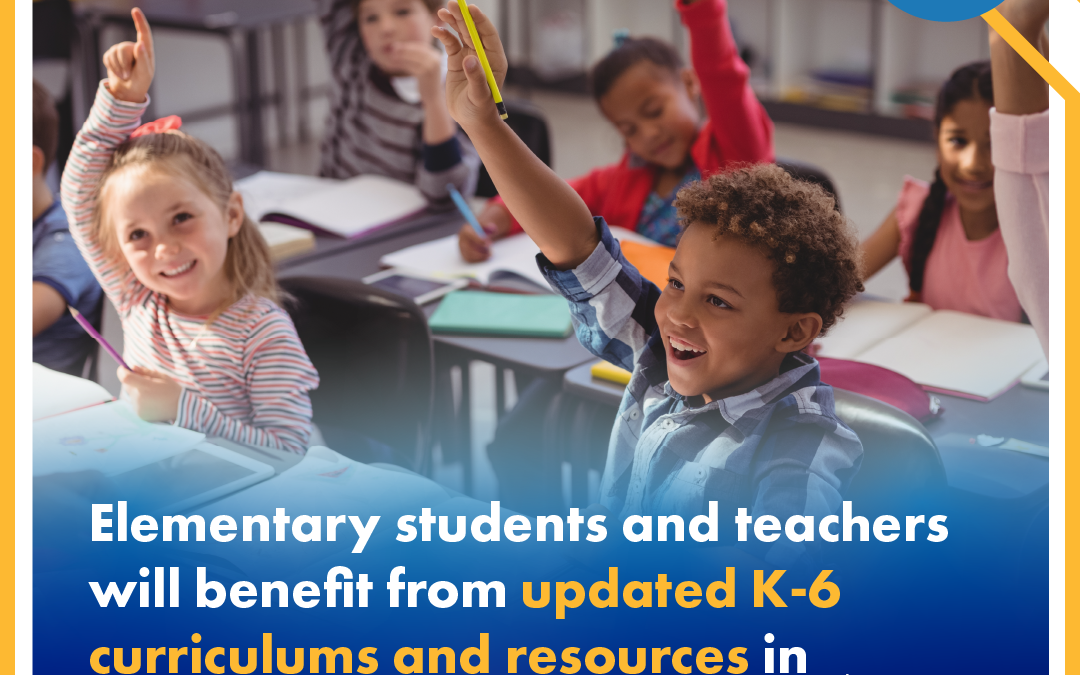
The updated Alberta French and science curriculum is ready for K-6 classrooms this fall.
All K-3 students will learn from new French First Language and Literature, French Immersion Language Arts and Literature and Science curriculums this September. School authorities may choose to implement the new curriculum for the same subjects in grades 4-6.
“Curriculum renewal is essential to help prepare our students for a rapidly changing labour market, which is placing an ever-increasing premium on adaptability and transferable skills,” said Minister of Education Adriana LaGrange in a press release.
“To ensure successful implementation, we are making significant investments to provide teachers with the resources they need to support students in transitioning to the new curriculum.”
Watch the press conference.
Changes have been made to these subjects based on feedback of the original draft. This includes addressing areas of concern with content load, age appropriateness and wording clarity.
Specific changes include:
Strengthening French First Language and Literature content by adding spelling rules and specifying which types of texts are studied in each grade.
Enhancing French Immersion Language Arts and Literature content to align with the principles of learning an additional language and developing students’ creative writing skills.
Strengthening Science content to promote understanding of agricultural practices in Alberta and align with previously implemented subjects. In the new K-6 Science curriculum, students in Grade 3 will examine how layers of Earth’s surface, including the discovery and location of dinosaur fossils, hold information about the past. In Grade 6, students will examine abstractions, coding structures and the impact of computers and technology.
In the 2022-23 school year, 47 school boards across the province piloted the draft curriculum, including 941 teachers and 22,000 students.
The updated curriculums align with top-performing jurisdictions in Canada and globally and with new curriculum previously implemented across the province.
“For this school year, we had 60 teachers from K-6 participate in the French Immersion Language Arts and Literature (FILAL) pilot. Teachers are impressed with how condensed and clearly laid out the curriculum is as well as the consideration that has been given to age-appropriate sequencing of learning outcomes,” said Cathie Williams, board chair of the Calgary Catholic School Board.
“Teachers are looking forward to implementing this curriculum next school year and to receiving a list of curated Alberta Education resources to support with implementation.”
Successful French and Science curriculum implementation
To aid with the implementation, Alberta’s government is investing approximately $47 million in professional learning for teachers, as well as learning and teaching resources to make sure both teachers and students are equipped for the updated curriculum in the classroom.
This includes $45 on a per-student basis to purchase additional resources to support implementation , $800 on a per-teacher basis for professional learning, and further funding retained by Alberta Education to purchase, licence and develop high quality learning and teaching resources aligned with the new curriculum.
“Professional development and timely access to resources are essential to ensure educators and the system are fully prepared to implement new curriculum. The Alberta School Boards Association (ASBA) looks forward to continuing to engage with our member boards, and to collaborate with the government and education partners on required supports to ensure the success of all students,” said Marilyn Dennis, president of ASBA.
Alberta Education is working with the province’s four largest school authorities to develop science resources and ensure they are accessible to all school authorities to support student learning.
To help teachers across the province prepare for the upcoming school year, Alberta’s government is providing a variety of supports and resources online, including:
the final K-6 French First Language and Literature, French Immersion Language Arts and Literature and Science curriculums
the Provincial Resource Review Guide, with guidelines for selecting learning and teaching resources aligned with the new curriculums
bridging resources to assist with transitioning from the current curriculums to the new curriculums
videos and support documents with an overview and orientation to the new curriculums
tools that support teacher planning, collaborating and sharing
information about flexible professional learning opportunities
Alberta Education will provide school authorities with additional details to facilitate planning and implementation for September. School authorities will also continue to have flexibility to select resources to support curriculum implementation in their classrooms.
School authorities will also implement grades 4-6 English Language Arts and Literature and Mathematics curriculums this fall.
Between March 2021 and February 2023, Alberta’s government provided multiple opportunities to share feedback on the curriculum:
More than 34,000 online surveys were completed.
More than 1,100 attendees participated in virtual information sessions hosted by Alberta Education.
Nearly 600 Albertans shared diverse viewpoints on each subject area at 31 virtual engagement sessions.
Twelve partner organizations were provided $800,000 in grants to help them engage with their communities and report their unique perspectives.
In the 2021-22 school year, about 360 teachers piloted draft K-6 Mathematics, English Language Arts and Literature, Science, Physical Education and Wellness, Social Studies and Fine Arts curriculums with about 7,800 students.
In the 2022-23 school year, 941 teachers are piloting draft K-6 French First Language and Literature, French Immersion Language Arts and Literature and Science curriculums with 22,000 students in 47 school authorities across the province.
The 12-member Curriculum Implementation Advisory Group had representation from across the education system to help ensure the best interests of the entire education system inform the group’s advice and recommendations.
The updated curriculum can be read on the LearnAlberta site here.
Red Deer-North constituents with questions, concerns or comments can reach out to the local constituency office via the form on the contact page or by phoning (403) 342–2263.
Anyone looking to send comments directly to the Minister of Education is asked to contact the Office of the Minister of Education at education.minister@gov.ab.ca or (780)427-5010.
Youth aging out of government care will have extra supports to transition into living successful, independent lives.
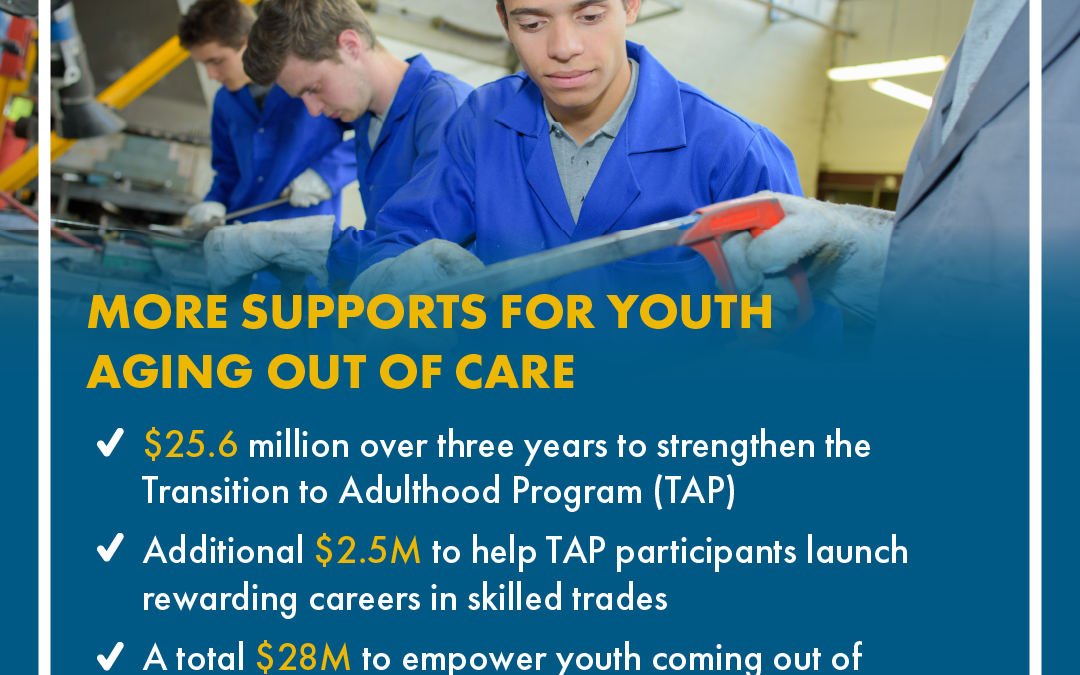
The Government of Alberta is investing $28 million through Budget 2023, including $25.6 million over the next three years for the Transition to Adulthood Program (TAP). An additional $2.5 million will go towards enabling youth and young adults to build a career in skilled trades.
“Youth and young adults transitioning out of care deserve to have access to the same workplace opportunities and post-secondary paths as their peers. My ministry is taking action to remove the barriers they face and invest in their future so they can chase their dreams and reach their full potential,” said Minister of Children’s Services Mickey Amery.
Youth aging out of care in Canada earn about $326,000 less over their lifetime, statistics show, compared with their peers. Research also shows they face barriers moving on to post-secondary education, and have higher rates of homelessness, unemployment or underemployment. Those leaving government care typically live with mental health challenges, and have experienced trauma. They are more likely to face discrimination and barriers to training and education, and Alberta’s government is helping to change that.
With the extra funding, TAP’s budget will increase to $68 million. This will help more youth and young adults aging out of government care access specialized, coordinated and consistent services that will prepare them to live independently, pursue further education and build careers. Ongoing emotional supports are also available.
The funding from Skilled Trades and Professions will support about 500 youth and young adults looking to start a career in the trades. This will include training and education-related supports, such as worksite tours, mentorship programs, preparing for apprenticeship exams, career events, training, work placements and skills development.
Emilia St. Pierre, once a youth in government care and now a Red Seal welder and NAIT graduate, says she thinks more will pursue trades careers.
“I think this is a fantastic investment for youth and young adults aging out of care. I’m a prime example of what can happen when a youth aging out of care has the right supports in place to succeed and chase their dreams,” she said.
Pat Kynock, who has fostered more than 50 children and youth over 30-years says the investment can help save those transitioning out of care.
“They have gone through enough hardships in life and don’t have the same connections that their peers do. These additional supports would make a huge impact in the kids’ lives and help set them up for success.”
Red Deer-North constituents with questions, concerns or comments can reach out to the local constituency office. They can do so via the form on the contact page or by phoning (403) 342–2263.
A student transportation investment by Alberta’s government will help more students take the bus.
Through Budget 2023, a total of $414 million over three years will support transportation improvements and keep education affordable and accessible.
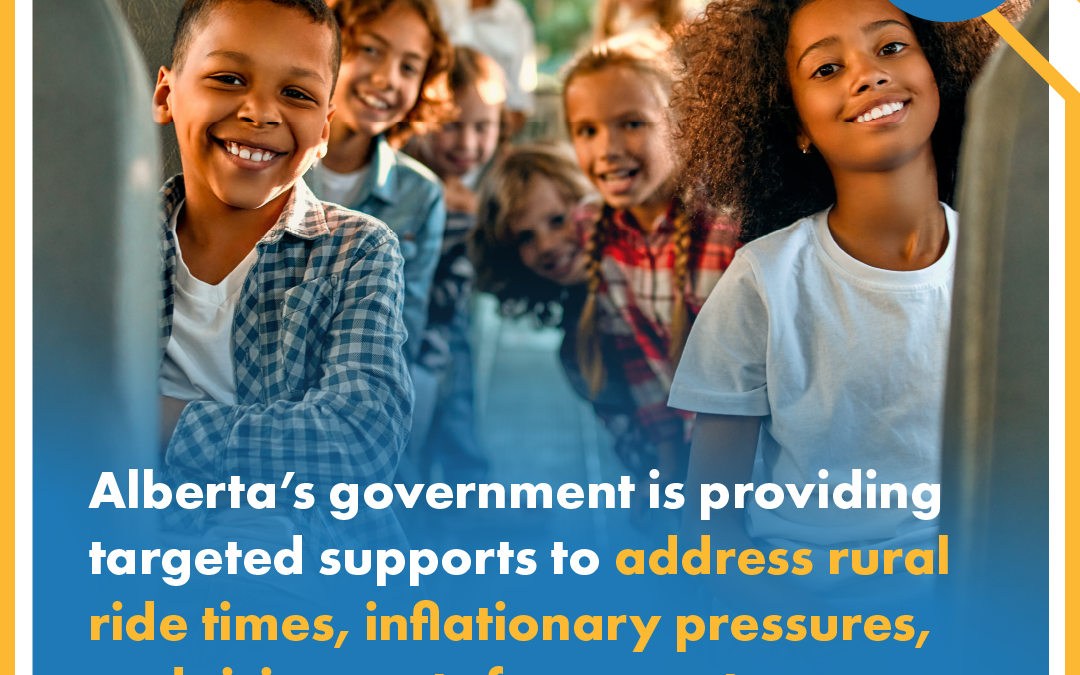
This is in response to feedback from parents, school authorities and others in addressing rural ride times, inflationary pressures and rising costs for parents.
“More than 300,000 students and their families rely on student transportation services every school day and we take that responsibility seriously,” said Minister of Education and Red Deer-North MLA Adriana LaGrange.
“With the changes we are making and our increased investment through Budget 2023, the student transportation system will be safer to students, more affordable for families, and provide enhanced funding for our school authority partners.”
Saving families money
About 80,000 additional students will be eligible for provincial transportation funding through new regulatory changes. This equates to more than $20 million in savings for parents across the province.
47,000 of those students are currently paying a fee to use bus services and will become eligible for provincial support.
Eligibility distance lowered
Starting Sept. 1, 2024, Grade 1-6 students living a minimum of one kilometre away from their designated school will be eligible for government-funded busing services. Those in Grade 7-12 must live two kilometres away, measured by the shortest driving route.
Currently, students must live at least 2.4 kilometres from their school.
Lowering the distance eligibility will enable almost 33,000 more students to get to school safely on a school bus. About 20,000 of those students will be able to use buses already in service and not at capacity, especially in rural areas.
Approximately 250 additional bus routes will be needed to accommodate the remaining 13,000 students in both urban and rural areas.
School authorities may choose to implement these changes sooner, in the 2023-24 school year, with the investment outlined in Budget 2023.
Cost and inflationary pressures
Student transportation funding will also address cost and inflationary pressures for schools and bus contractors.
Funding will be provided for an additional 100 bus routes for rural students, which will shorten ride times by nine per cent. Driver training funding will increase and support 1,250 drivers, including 350 new drivers and increase the driver work force by six per cent.
The Fuel Price Contingency Program will also continue into 2023-24. The program helps schools address high fuel costs and protect bus services. This saved school authorities $8.5 million in the 2021-22 school year, $16.5 million in the 2022-23 school year, and is projected to save $23.5 million in the 2023-24 school year.
“School boards face pressures from rising costs due to inflation, fuel, wages and insurance, in addition to the challenges of recruiting, training and retaining school bus drivers,” said Alberta School Boards Association (ASBA) President Marilyn Dennis.
“ASBA is pleased to see targeted transportation funding aimed at helping to offset these challenges and looks forward to continued collaboration with the government on the implementation of the transportation framework.”
Student Transportation Task Force
Funding increases and regulatory changes build on the work of the Student Transportation Task Force.
The task force was created in May 2020 and brought together the education system, transportation industry representatives and MLAs to examine the future of student transportation in Alberta. The funding increases in Budget 2023 are part of the third and final phase of the action plan to address the task force’s recommendations.
Red Deer-North constituents with questions, concerns or comments can reach out to the local constituency office via the form on the contact page or by phoning (403) 342–2263.
Anyone looking to send comments directly to the Minister of Education is asked to contact the Office of the Minister of Education at education.minister@gov.ab.ca or (780)427-5010.